
DMD-Lab facilities support hands-on research in additive manufacturing, materials characterization, rheology, imaging, quality assessment, and experimental validation.
Rheology and Flow Characterization
The ARES-G2 rotational rheometer and Rosand RH2000 capillary rheometer support the study of material flow, viscosity, shear behavior, extrusion response, and printability for polymers, composites, and advanced manufacturing materials.
ARES-G2 Rotational Rheometer
ARES-G2 is a high-performance rotational rheometer that can measure viscosity, characterize non-Newtonian behaviors like shear thinning, thixotropy, yield stress of complex fluids, etc. for a variety of materials. It is equipped with a convection oven and a chiller which enables characterization at both high and low temperatures.

Rosand RH2000 Capillary Rheometer
Rosand RH2000 is a capillary rheometer that offers great flexibility in the rheological characterization of a wide range of materials including polymers, coatings, inks, ceramics, metals, sealants, etc. It can also be used to study the material extrusion processes such as injection molding and hot melt extrusion.
Materials Characterization
The Nicolet iS20 FTIR spectrometer supports chemical identification, material verification, contaminant analysis, and structure-property studies for polymers, composites, bio-derived materials, and recyclable systems.
Nicolet iS20 FTIR Spectrometer
Nicolet iS20 FTIR Spectrometer is a compact tabletop spectrometer that can quickly collect and analyze high-quality spectral data from different samples. It can accurately recognize multi-component samples, detect contaminants, and analyze mixtures.

Imaging and Microscopy
The Leica TCS SP5 confocal microscope supports high-resolution imaging for material surfaces, microstructures, defects, and process-related features.
Leica TCS SP5
Leica TCS SP5 is a confocal microscope that is capable of confocal and multiphoton imaging with broad range of scan speeds at very high resolution. Equipped with five channels for simultaneous SP detection and optional AOBS, the machine can deliver bright, noise-free images with minimal photo damage at high speed.

Additive Manufacturing Platforms
The UltiMaker S5 Pro, Lulzbot TAZ Workhorse, and Creality Ender-3 printers support polymer additive manufacturing, prototyping, material extrusion studies, design iteration, and student training.
UltiMaker S5 Pro 3D Printer
UltiMaker S5 Pro is a powerful 3D printer with a large build volume. It is equipped with a 6-spool material station and top enclosure that enables it to store material in a controlled environment. By controlling humidity, dust, and other environment parameters, the material can be stored in good condition and ready for printing for a long time.

Lulzbot TAZ Workhorse 3D Printer
Lulzbot TAZ Workhorse reliable and popular 3D printer with a large build volume, enhanced print quality, and accuracy. It can print with traditional materials like PLA, ABS, TPU, etc. as well as polymer composites and flexible materials.

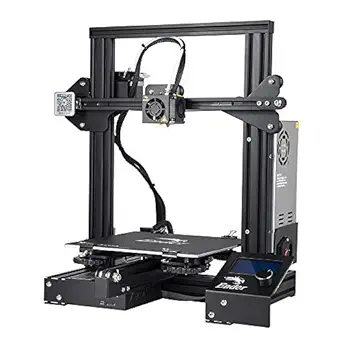
Creality Ender-3 3D Printer
Creality Ender-3 is a portable and affordable 3D printer that offers room for customization and flexibility. In addition to printing 3D models, these printers can be used as test setups for different hot ends, measurements, and characterizations.
Color, Quality, and Inspection
The color assessment cabinet box supports controlled visual inspection, color evaluation, material comparison, and quality assessment for manufactured and printed samples.
Color Assessment Cabinet Box
Color assessment cabinet box is used for visual assessment of color fastness, color proofing, color identification, and fluorescent material.

Research Use
DMD-Lab equipment supports research in process physics, predictive materials design, additive manufacturing, rheology, smart manufacturing, and experimental validation.
Student Training Use
Students gain hands-on experience with real instruments, manufacturing platforms, material data, and lab-based workflows.
Collaborate With DMD-Lab
DMD-Lab welcomes equipment-enabled collaboration with students, industry partners, sponsors, and academic researchers working to improve how products are made, measured, and moved.